How to Use LinkedIn to Get a Job in Africa
By Ingashian Gibendi, Career Strategist and Founder of The Career Whisperer
You've set up a LinkedIn profile, done everything you were told to do, and you're still waiting. No recruiter messages. No callbacks. Just silence.
Using LinkedIn to get a job in Africa means building a profile that recruiters can actually find, knowing how to search and apply for roles with intention, and using the platform's networking tools to access the 80% of jobs that are never publicly advertised.
We asked over 27,000 African job seekers about their LinkedIn habits. 71% had either no content on their profile or an outdated one with very low visibility. Only 14% were fully optimised. That is not a people problem. That is a strategy problem, and this guide exists to fix it.
According to LinkedIn, 49 million people search for jobs on the platform every single week. The opportunity is there. The question is whether your profile is positioned to capture it.
LinkedIn Profile Optimisation: How to Get Found by Recruiters
Your profile is not a digital CV. It is a search result. Every time a recruiter types a job title or skill into LinkedIn's search bar, the platform returns a ranked list of people. Whether your name appears on that list depends entirely on how your profile is set up.
Most people write their profile for the people who already know them. The goal is to write it for the people who have never heard of you.
How to Write a LinkedIn Headline for Job Seekers
Your headline is the single most important line on your profile. It sits directly under your name; it appears in every search result, and it is what a recruiter reads in the first two seconds before deciding whether to click.
Do not just write your job title. Write a headline that tells recruiters what you do and the value you bring. Here is the difference:
| Weak Headline | Strong Headline |
| Recent Graduate | Finance Graduate | Helped reduce reporting time by 40% using Excel | Open to Roles in Nairobi |
| Marketing Manager | Marketing Manager | Grew social following from 2K to 18K in 9 months | FMCG | East Africa |
| Looking for Work | Customer Service Professional | 95% satisfaction rate across 3 years | Open to Opportunities in Kenya |
| Software Engineer | Software Engineer (Python, React) | Built and shipped 3 products used by 10K+ users across Africa |
The difference between a headline that gets skipped and one that gets clicked.
The formula is straightforward: Job Title + Key Skills or Industry + Location or Context. Keep it under 220 characters. LinkedIn weights the headline heavily in its search algorithm, so the more specific you are, the more likely you are to appear in the right searches.
How to Write Your LinkedIn About Section
Your About section is where you give context to everything else on your profile. Think of it as a short professional introduction, written in your own voice, not a formal biography.
Start with one sentence that describes what you do and who you do it for. Follow with two or three sentences covering your background, key achievements, or areas of expertise. Close with a clear line about what you're looking for right now.
Keep it under 300 words. Write in the first person. Write it the way you'd introduce yourself in a real conversation, not the way you'd write a cover letter. Recruiters respond to clarity and personality, not corporate language.
 This is what an optimised LinkedIn profile looks like: a specific headline, a filled About section, visible skills.
Which Skills to Add to LinkedIn as an African Job Seeker
The Skills section is not just a list. It is a keyword bank. LinkedIn's algorithm pulls from the skills you've listed when matching your profile to recruiter searches.
Add skills that reflect the roles you're targeting. Look at three or four job descriptions for positions you want and note the skills that appear repeatedly. Those are your priority additions. You can list up to 50 skills. Aim for at least 10, and pin your top three to the front of the list.
Once your profile is set up correctly, the next step is making sure the right settings are switched on before you start applying.

Your skills section is a keyword bank. The right ones make you findable. The wrong ones make you invisible.
LinkedIn Settings Every Job Seeker Needs to Turn On Before Applying
Before you start applying for roles, two settings will significantly increase the number of opportunities that come to you, rather than waiting for you to find them yourself.
How to Use LinkedIn Open to Work
The Open to Work feature signals to recruiters that you're actively looking. You can choose to make this visible only to recruiters, which keeps it private from your current employer, or visible to all LinkedIn members.
To set it up: go to your profile, click "Open to," and select "Finding a new job." Add the job titles you're targeting, your preferred location (include Remote if relevant), and your availability. Be specific with your job titles. The more targeted you are, the more relevant the inbound interest you'll receive.
How to Set Up LinkedIn Job Alerts
Job alerts send notifications directly to you when new roles matching your criteria are posted. This means you can apply within hours of a job going live, increasing your chances of being seen before the role fills.
To create a job alert: go to the Jobs section, run a search using your target job title and location, and toggle "Set alert" at the top of the results. Set it to Daily. Check it every morning. Applying in the first 24 hours puts you in a significantly smaller pool of applicants.
With your profile optimised and your settings active, the next step is knowing how to search and apply strategically, not just frequently.
How to Find Jobs on LinkedIn Beyond the Job Board
When we asked African job seekers where they search for roles, 55% said they use LinkedIn but only wait for postings. That approach gives you access to roughly 20% of available opportunities. The other 80% never get posted anywhere.
Most jobs are filled through networks and referrals before a job description is ever written. Companies prefer it that way because it is faster, cheaper, and more discreet. Some roles are created informally around a specific person. Others are filled through a quiet conversation weeks before anything goes public. The professionals who land those roles are not the ones who applied fastest. They are the ones who were already visible and already trusted.
LinkedIn gives you direct access to those conversations, but only if you use it proactively.
How to Get Noticed Before a Job Is Even Posted
The most important shift you can make is moving from job seeker to job hunter. A job seeker waits and responds. A job hunter builds visibility, targets specific companies, and creates relationships before a vacancy is announced.
On LinkedIn, this means being deliberate about who you connect with, consistently engaging with content in your target industry, and making sure your profile clearly communicates your value proposition: what you bring, who you bring it to, and why it matters. Before anyone refers you or thinks of your name when an opportunity comes up, they need to understand exactly what you do and why you're good at it.
When you are clear on your value proposition, you do not have to wait for a job to be posted at all. You can approach your target companies directly, identify a specific problem your expertise solves, and reach out with that angle. A message that says "I noticed your team is expanding into East Africa and I have three years of experience doing exactly that" opens doors that no job application ever will. Companies hire people who demonstrate they understand the business, not just people who applied on time.
Make a list of ten to fifteen companies you want to work for. Follow their LinkedIn pages. Connect with people who work there, not to ask for a job immediately, but to build a genuine presence in their network. When a role opens internally, hiring managers ask their teams first. Being a familiar, credible name in that conversation puts you ahead of every public applicant before the job is even posted.
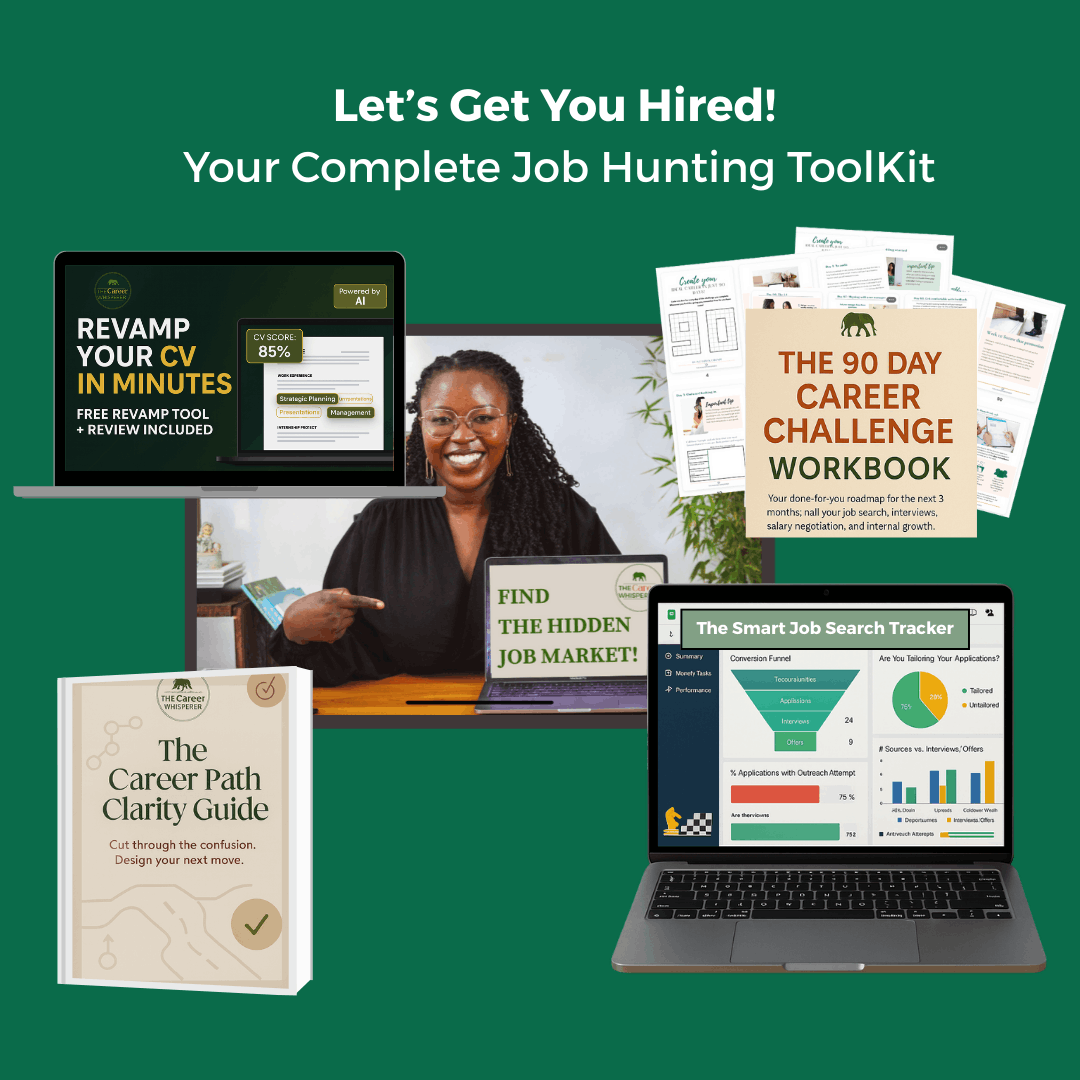
The Hidden Job Market Masterclass inside the Let's Get You Hired Toolkit walks you through identifying your value proposition, building your target company list, and making the kind of first contact that actually gets a response.
How to Search for Jobs on LinkedIn (And When It's Worth It)
Public job postings are worth using, but they should not be the centre of your strategy. If you are spending the majority of your job search time on job boards, you are competing in the most crowded 20% of the market for the lowest-paying, least discreet roles.
When you do apply publicly, be targeted. Use the Jobs tab, search your target job title, and filter by date posted (past 24 hours gives you the freshest listings) and location. Apply within the first 24 hours where possible. Early applications consistently receive more attention than those submitted after a role has been live for a week.

Filter by "Past 24 hours" to apply before the role fills up
Does LinkedIn Easy Apply Actually Work?
Easy Apply lets you apply using your LinkedIn profile without filling in an external form. It is convenient, but it is also the most passive and competitive route available. The application still goes through an ATS, so keyword alignment between your profile and the role matters. A generic profile sent through Easy Apply will not stand out.
If you use it, use it selectively, and only for roles where your profile already closely matches what the employer is asking for. For roles that genuinely matter to you, apply on the company's website directly and separately reach out to someone at that company through LinkedIn. A warm connection alongside a direct application is significantly more effective than Easy Apply alone.
Finding the right roles is only part of the equation. Getting in front of the right people before those roles exist is where most of the real opportunity lives.
| LinkedIn Easy Apply | Direct Application | |
| Speed | Fast (One Click) | Slower (full form) |
| Signals Intent | Low | High |
| Goes through ATS | Yes | Yes |
| Best used when | Your profile matches the role | The role is a top priority for you |
| Risk | Generic profiles get filtered out | Requires more time per application |
Easy Apply is convenient. Direct application is intentional. Know when to use each.
How to Find and Message Recruiters on LinkedIn
Eighty-five percent of the African job seekers we spoke to said recruiters rarely or never reach out to them. That number drops significantly when people start making first contact themselves rather than waiting to be found.
How to Find Recruiters on LinkedIn
In the LinkedIn search bar, type "Recruiter" or "Talent Acquisition" followed by the industry or company you're targeting. For example: "Talent Acquisition Manager | Safaricom" or "Recruiter | Tech | Nigeria." Filter results by People and by your target location.
You can also search directly through company pages. Go to the page of any organisation you want to work for, click "People," and filter by job titles like "Recruiter," "HR," or "Talent." This gives you direct access to the people responsible for filling roles, without waiting for a posting to appear.

Not every opportunity gets posted. Sometimes you have to find the person doing the hiring before the role exists.
How to Message a Recruiter on LinkedIn Without Premium
You do not need a Premium account to message recruiters. If you're connected with someone, you can message them directly for free. If you're not yet connected, send a connection request with a short personalised note.
Here is a message structure that gets responses:
"Hi [Name], I came across your profile while researching [Company]. I'm a [Job Title] with experience in [Key Skill or Area] and I'm exploring new opportunities in [Industry or Location]. I'd love to connect and learn more about any roles your team might be considering."
Keep it short. Make it specific to that person and their company. Do not paste your CV into the message. Recruiters receive dozens of messages a day. The ones that get responses feel personal and considered, not copied and pasted.
Direct outreach opens doors. A strong network keeps them open.
LinkedIn Networking Tips for African Professionals
Only 9% of the African job seekers we surveyed have a warm, active network that regularly connects them to opportunities. That means the remaining 91% are competing almost entirely on public job postings, which represent less than 20% of available roles.
How Many LinkedIn Connections Do You Actually Need?
Once your connection count reaches 500, LinkedIn displays "500+" publicly rather than the exact number. This gives the impression of an established network and improves how your profile is ranked in searches. Aim for 500 as a milestone, but don't rush it by connecting with people you have no real reason to know.
Start with people you already have a relationship with: former classmates, colleagues, lecturers, and professionals you've worked with in any capacity. Then expand to people in your target industry, recruiters at companies you want to work for, and professionals whose content you regularly engage with.
How to Network on LinkedIn When You're Starting From Zero
The fastest way to build a meaningful network from scratch is to engage before you connect. Comment on posts from people in your target industry. Ask thoughtful questions. Share your own perspective on topics you know well. When you then send a connection request, your name is already familiar.
Consistency matters more than volume here. Ten genuine interactions a week will build a stronger network than sending 100 blank connection requests ever will.
I've worked with job seekers across Africa who had solid backgrounds and strong CVs but couldn't get a single response on LinkedIn. In almost every case, the problem wasn't their experience. It was that their profile wasn't findable. Their headline said "Graduate." Their About section was empty. They had fewer than 100 connections and no activity. Recruiters were searching for exactly the skills these people had, and their profiles simply weren't showing up. Fixing the profile, turning on the right settings, and sending five targeted messages a week changed their results within weeks, not months. That is what intentional use of LinkedIn looks like. The Let's Get You Hired Toolkit gives you the exact templates and strategy to do the same.
 The goal isn't just to be active on LinkedIn. It's to be found by the right people.
Take Your LinkedIn Job Search Further
73% of the African job seekers we spoke to received zero interviews in the past four weeks. Most were applying consistently. The gap was not effort. It was visibility, strategy, and knowing how to use the tools that were already available to them.
LinkedIn works when you work it with intention. If you're ready to move from applying in silence to getting noticed by the right recruiters, the Let's Get You Hired Toolkit walks you through every step, with the templates, tools, and strategies built specifically for the African job market.
Get the Toolkit
Want to know exactly where your job search is breaking down? Take the free Career Audit. It takes 4 minutes and tells you precisely what to fix first.
Take the free quiz
Frequently Asked Questions
Does LinkedIn actually work for job seekers?
Yes, it does. LinkedIn has over 1.2 billion members worldwide, and 49 million people use it to search for jobs every single week. Both local and international recruiters are increasingly finding African professionals. The key is having a profile optimised to appear in those searches, not simply a profile that exists.
Is LinkedIn free, or do I need Premium to get a job?
LinkedIn is free to use, and most job seekers do not need Premium to get results. The free version allows you to build your profile, apply for jobs, connect with recruiters, and message your connections directly. Premium features like InMail credits and expanded search filters can be useful, but they are not necessary. A well-optimised free profile will outperform a neglected Premium account every time.
What should I put in my LinkedIn headline when I'm looking for a job?
Use this formula: Job Title + Impact or Achievement + Industry or Context + Location. A headline that shows what you have done will always outperform one that just lists what you do. For example: "Marketing Graduate | Grew social following from 2K to 18K in 9 months | FMCG." Your headline is one of the most heavily weighted fields in LinkedIn's search algorithm. The more specific and results-driven it is, the more likely you are to appear when recruiters search for what you offer.
Can I message recruiters on LinkedIn without Premium?
Yes. If you're connected with a recruiter, you can message them directly for free. If you're not yet connected, send a connection request with a short personalised note explaining your reason for reaching out. Premium's InMail feature lets you message people outside your network, but a well-written connection request achieves the same result without the monthly cost.
Does LinkedIn Easy Apply actually work, or does it hurt my chances?
Easy Apply can work when your profile is strong and closely matches the role. The application still goes through an ATS, so keyword alignment between your profile and the job description matters just as much as with any other application. Where Easy Apply tends to underperform is when the profile is generic, because the same incomplete information gets sent to every role. Use it where you're a strong match. For the roles you really want, apply directly on the company's website.