How to Build a Personal Brand for Job Seekers
By Ingashian Gibendi, Career Strategist and Founder of The Career Whisperer
You're applying. You're showing up. But the silence keeps coming, and you're starting to wonder what you're missing.
Personal branding for job seekers is the practice of making yourself findable, credible, and memorable to the right people, before a job is ever posted. It's not about becoming an influencer or posting every day. It's about being clear on what you bring to the table, and making sure the people who need to find you actually can.
Most job seekers put almost all of their energy into applications. They send more CVs, apply to more roles, and wait for responses. The problem is that this approach only gives you access to about 20% of available jobs. The other 80% are filled through networks, referrals, and direct conversations that happen before a role is ever publicly advertised. The numbers back this up. LinkedIn's own data shows that referrals and direct outreach fill the majority of roles globally, before a vacancy is ever posted online. The professionals who land those roles aren't the ones who applied fastest. They're the ones who were already visible, already trusted, and already known.
According to our Career Audit Quiz data from over 31,000 African job seekers, Visibility is one of the lowest-scoring areas on the quiz, averaging just 55% across all respondents. That's not a talent problem. It's a strategy problem.
 Most job seekers are applying. Very few are being seen.
If you’re interested in finding out your Visibility score it takes less than four minutes. Take the free Career Audit Quiz.
What Personal Branding Actually Means for Job Seekers
Personal branding gets a bad name because most people connect it to self-promotion, and self-promotion feels uncomfortable. So let's be direct about what it actually is.
Your personal brand is the answer to one question: when someone who has met you, seen your LinkedIn profile, or come across your work thinks about you, what do they think? A strong personal brand means that answer is specific, positive, and consistent with the role you're trying to land. A weak one means you're easy to forget, or in many cases, hard to find in the first place.
For job seekers, personal branding isn't about being loud. It's about being clear. Clear on your value, clear on who you help, and clear on why someone should choose you over the next candidate. When that clarity is there, recruiters can find you in searches, colleagues can refer you when a relevant role comes up, and hiring managers can picture you in the position before the interview has even started.
Think of it this way. Your personal brand isn't what you say about yourself. It's what people say about you when you're not in the room, and whether that matches the opportunity you're going for. Most job seekers have very little control over that because they've never built it intentionally. That's exactly what this guide is for.
Why Is Personal Branding Important for Your Job Search?
The data from our Career Audit Quiz makes this clear. Out of 31,000+ job seekers who've completed it, 73% received zero interviews in the past four weeks, and the majority of them were applying regularly. The gap wasn't effort. It was visibility.
When your personal brand is clear and consistent, three things tend to happen. Recruiters can find you in searches instead of waiting for you to find them. People in your network know exactly what to say when a relevant opportunity comes up in conversation. And hiring managers arrive at your interview already inclined toward you because they've seen evidence of your thinking and your value before you walked through the door.
What Should Your Personal Brand Say About You?
Your personal brand needs to communicate three things: what you do, who you do it for, and what makes you credible. Everything else is secondary to getting those three things right.
A strong personal brand is specific, not general. Words like "marketing professional" or "finance graduate" are not brands. They're job titles. Your brand lives in the detail. Think about your industry, the geography you work in, and the results you create or are actively building toward. That combination is what makes you searchable, easy to refer, and credible to the people who are already looking for someone like you.
| Element | Weak Version | Strong Version |
|---|---|---|
| Headline | Finance Professional | Finance Analyst helping African fintechs build investor-ready models |
| About section | Passionate team player | I help early-stage startups structure their finances so they can raise with confidence |
| Skills section | Microsoft Excel, Communication, Teamwork | Financial modelling, Startup finance, Investor reporting |
| Engagement | Profile exists, no activity | Comments weekly on finance and startup conversations |
| Network | 50 generic connections | 300+ connections in target industry, growing intentionally |
The difference between the left and right columns isn't talent or years of experience. It's clarity. You can shift from one column to the other without getting a new qualification or waiting until you feel more established.
How to Build a Personal Brand for Job Seekers: Step by Step
Building your personal brand doesn't have to be complicated. These five steps give you a solid foundation, whether you're a recent graduate or someone changing direction mid-career.
Step 1: Define your value. Before anything else, get clear on what you do, who you do it for, and what makes you the right person for it. This isn't a list of your skills. It's a statement about the specific value you bring to someone else. Ask yourself: what problem do I solve, and for whom do I solve it?
Step 2: Write your personal brand statement. This is one or two sentences in plain language that captures what you do and who you do it for. It doesn't need to sound impressive. It needs to be specific. "I help fast-growing African startups build finance functions that scale" is a personal brand statement. "Finance professional with five years of experience" is not. Write it, test it on someone who doesn't work in your field, and keep refining it until they understand it straight away without asking follow-up questions.
Step 3: Optimise your LinkedIn profile around that statement. Your headline, About section, and featured content should all reflect the same clear message. If someone lands on your profile and can't tell within ten seconds what you do and who you help, the profile isn't doing its job. Our quiz data shows that only 14% of African job seekers have a fully optimised LinkedIn presence. 48% have a profile but no regular activity. 23% have an outdated profile that gives them very low visibility in search results. Once you have your brand statement in place, our LinkedIn Profile Optimisation Checklist for Job Seekers walks you through exactly what to fix and in what order.
Step 4: Show up consistently in your industry's conversations. Comment on posts from people in your field. Share what you know about topics relevant to the role you want. You don't need to post every day to make this work. You just need to show up often enough that your name starts to feel familiar to the right people. Familiarity builds trust, and trust is what leads to referrals.
Step 5: Make it easy for people to refer you. The goal is straightforward. Someone in your network should be able to describe what you do in one sentence when a relevant opportunity comes up in conversation. If they struggle to do that, your brand isn't clear enough yet. Make it easy for them to help you. Be specific enough that they know exactly when your name should come to mind.
 Visibility doesn't happen by accident. It's built, step by step.
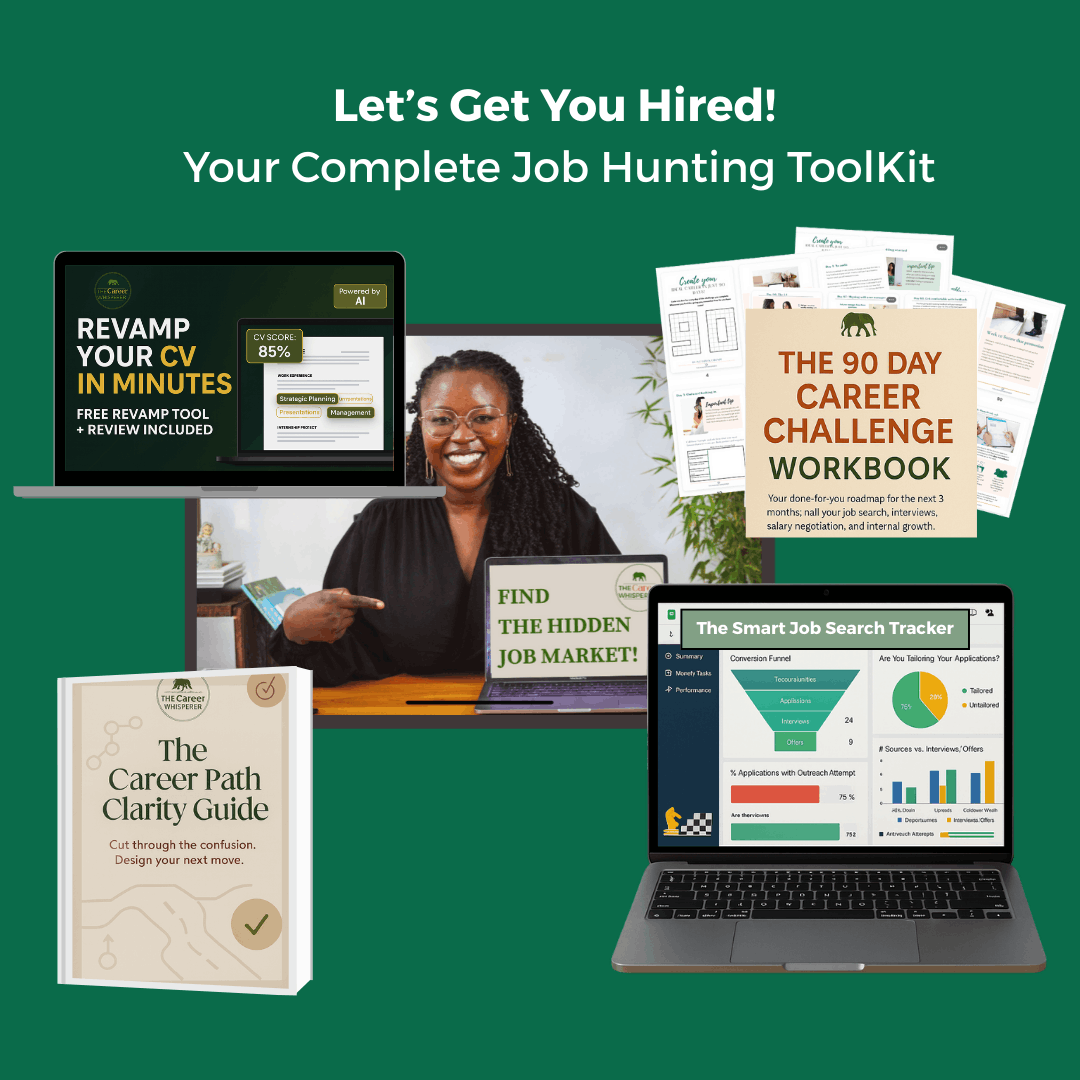
If you want support working through this, the Let's Get You Hired Toolkit is built around these same steps, with the tools and structure to help you follow through on each one.
How to Build a Personal Brand With No Experience
This is one of the most common questions that comes up. Job seekers who feel they have nothing to build a brand around because they haven't worked in a formal role. The assumption is that personal branding is something you do after you have an impressive career behind you. It isn't.
If you're a student or a recent graduate, your personal brand can be built around your area of study, the skills you're developing, the projects you've worked on, and the type of work you're actively positioning yourself for. You don't need ten years of experience to have a clear point of view. You need clarity on the direction you're heading and the value you're already in the process of building.
A final-year marketing student who regularly shares observations about brand strategy for African consumer goods companies is building a personal brand. A law graduate who writes short posts about employment law in Kenya is building a personal brand. Neither of them has landed a job yet. Both of them are becoming visible and credible in the spaces where the right people are already paying attention.
Start with what you know, what you're learning, and what problem you want to be known for solving. Then make that visible through your LinkedIn profile, through the conversations you participate in, and through the connections you build with a clear purpose. A brand is built through showing up consistently over time, not through a single impressive credential or one viral post. The job seekers who stay stuck are usually the ones waiting until they feel ready. You start before you feel ready and get sharper as you go.
What I've Seen Work in Practice
I've worked with job seekers across Africa who had strong backgrounds, solid qualifications, and genuine potential, but were getting no responses to their applications. In almost every case, the issue wasn't their experience. It was that no one could find them, and when people did find them, they couldn't quickly understand what they were getting. The LinkedIn profile said "Graduate." The About section was completely blank. Their network had no real idea what kind of role they were looking for or what made them the right fit.
Once we fixed that, once the profile and the brand statement actually reflected what they brought to the table, things changed. Not overnight. But within weeks, recruiters started reaching out. Former lecturers started thinking of them when relevant roles came up. Their own confidence in conversations shifted because they finally had clear words for what they were offering.
That's not magic. That's visibility doing its job. The clearer you are about your value, the easier it is for the right people to recognise it and act on it.
Frequently Asked Questions
What is personal branding for job seekers?
Personal branding for job seekers is the process of defining and communicating your professional value in a clear and consistent way, so that recruiters, hiring managers, and the people in your network can immediately understand what you do, who you do it for, and why you're the right person for the role. It's what makes you findable before a job is ever posted and referable when an opportunity comes up through people you know.
Why is personal branding important?
Most jobs are never publicly advertised. They're filled through networks and referrals well before anyone posts a vacancy online. Personal branding is what gets you into that part of the market by making you visible and credible to the right people before you ever need to apply. Without it, you're only competing in the smallest and most crowded part of the job market.
How do I build a personal brand with no experience?
Start with what you're studying, the skills you're building, and the type of work you want to be known for. You don't need a long career history to have a personal brand. You need clarity on where you're headed and the value you're already in the process of building. Make that visible through your LinkedIn profile, the conversations you join, and the connections you build with a clear intention over time.
What should my personal brand say about me?
It should answer three things clearly: what you do, who you do it for, and what makes you credible. It needs to be specific enough that someone can immediately understand what you bring and who would benefit most from working with you. "Marketing professional" is a job title, not a brand. Your brand lives in the specifics of your industry, your focus area, and the outcomes you help create.
What are the 7 pillars of personal branding?
The main pillars are clarity, consistency, visibility, credibility, authenticity, specificity, and value. Clarity means knowing exactly what you stand for. Consistency means showing up the same way across every platform and conversation. Visibility means being present in the spaces where your target audience is already paying attention. For job seekers who are just getting started, clarity and visibility are the two that matter most.
How do I write a personal brand statement?
Use this format: what you do, who you do it for, and what makes you the right choice. Keep it to one or two sentences and be specific about your industry, location, or the results you help create. "I help East African NGOs build communications strategies that increase donor engagement" is a strong brand statement. "Communications professional looking for new opportunities" is not. Write it, test it, and keep tightening it until people understand it the first time without needing to ask what you mean.
How long does it take for personal branding to work?
There's no set timeline that applies to everyone. What's consistent is this: job seekers who build a clear brand and show up regularly in the right conversations tend to see more inbound interest within weeks to a few months. The effort compounds over time. The more consistently you show up, the more familiar you become, and the more naturally people refer you without being prompted. The only variable fully in your control is when you decide to start.
Visibility Is Yours to Build
Personal branding isn't a strategy for people who already have big careers. It's the foundation of a job search that actually works in the way most jobs are actually filled. When you're clear on your value, visible to the right people, and consistent in how you show up, the job market stops feeling like a closed door and starts to feel like somewhere your name genuinely belongs.
The difference between job seekers who get consistent responses and those who stay stuck is rarely talent. It's usually visibility, and visibility is something you can build starting today.
Not sure where exactly your job search is breaking down? Take the free Career Audit Quiz and get your personalised Visibility score in just four minutes. And if you're ready to go further, the Let's Get You Hired Toolkit gives you the complete system to rebuild your CV and LinkedIn, work the hidden job market, and track your way to interviews.